Gochujang Noodles
These vegan Gochujang Noodles take sauce and noodles to an entirely different level! A lustrous spicy-and-savory sauce is tossed with udon noodles and vegetables, leaving you with a noodle bowl that’s layered with incredible flavors. Ready in just 30 minutes!
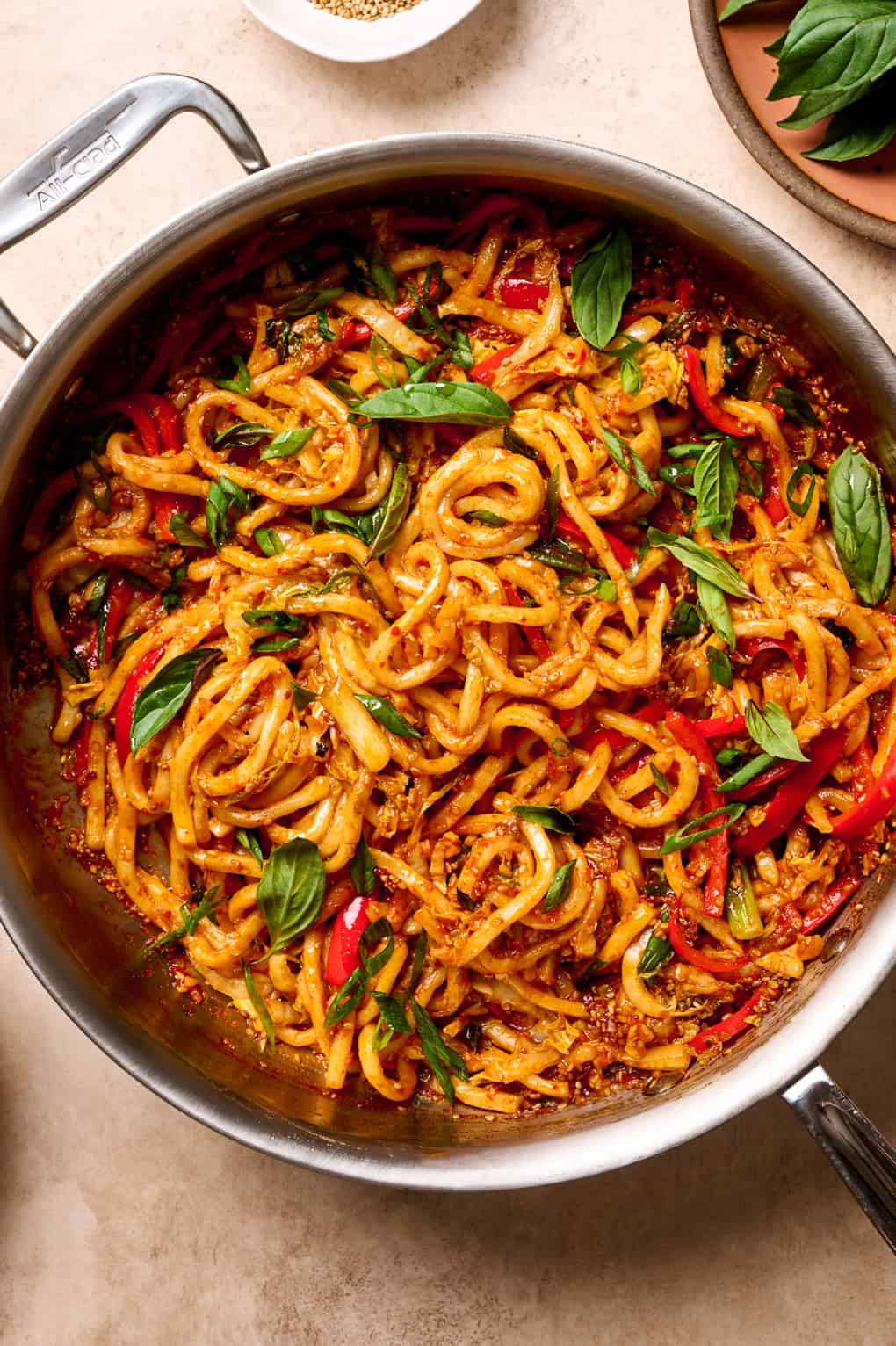 Foto: Rainbow Plant Life
Ingredients
- 16 ounces (450g) fresh udon noodles ((see Note 1 for subs))
- 3 tablespoons gochujang ((see Note 2))
- 1 tablespoon toasted sesame oil
- 2 tablespoons soy sauce ((use tamari for GF))
- 2 tablespoons mirin ((or rice vinegar))
- 1 ½ tablespoons organic brown sugar ((see Note 3))
- 1 tablespoon gochugaru ((optional))
- 1 heaping tablespoon neutral-flavored oil
- 1 bunch (about 6) scallions, whites and light greens chopped into 1-inch pieces
- 4 g arlic cloves, (finely chopped)
- 1 - inch piece ginger, (grated or minced)
- 6 to 8 cups (or handfuls) thinly sliced Napa cabbage (250g) OR 2 medium bell peppers, thinly sliced (see Note 4)
- ¼ cup (32g) roasted white sesame seeds (see Note 5)
- A few handfuls of Thai basil leaves ((or fresh cilantro, chopped))
- A drizzle of toasted sesame oil
Steps
Cook the noodles according to the package, but cook for a minute less to avoid a soggy dish. For fresh udon noodles, add to a pot of boiling water and cook for 1 minute; use a chopstick to loosen the noodles from their bundle and cook for another 30 seconds.
Scoop out some noodle water, then drain the noodles.
Make the sauce. Whisk together the gochujang, toasted sesame oil, soy sauce, mirin or vinegar, sugar, and gochugaru if using. Set aside.
Cook the aromatics. Heat the oil in a large frying pan over medium-high heat. Once shimmering, add the scallion whites and greens, garlic, and ginger (and bell pepper, if using). Season with a pinch of salt and cook for 1 to 2 minutes over medium-high heat. If using Napa cabbage, add it now; season with a pinch of salt, and stir-fry for 3 minutes, or until it reduces in size and is tender but not soft.
Add in the gochujang sauce and the sesame seeds and allow to sizzle. Add in the cooked noodles and use tongs to coat them in the sauce. If it feels dry, add a spoon or two of noodle water to bring the sauce together (more likely the case when using dry noodles; fresh udon noodles usually don’t need the water). Cook for 1 to 2 minutes, or until the sauce clings to the noodles.
Off the heat, stir in the Thai basil and a drizzle of toasted sesame oil.

Loading comments...