4 Easy Soy Sauce Pickles
These quick Japanese Soy Sauce Pickles (Shoyuzuke) are super easy to make at home and ready in just 3 hours. Crunchy and refreshing, they‘re so delicious with steamed rice and miso soup. Let‘s make 4 easy variations!
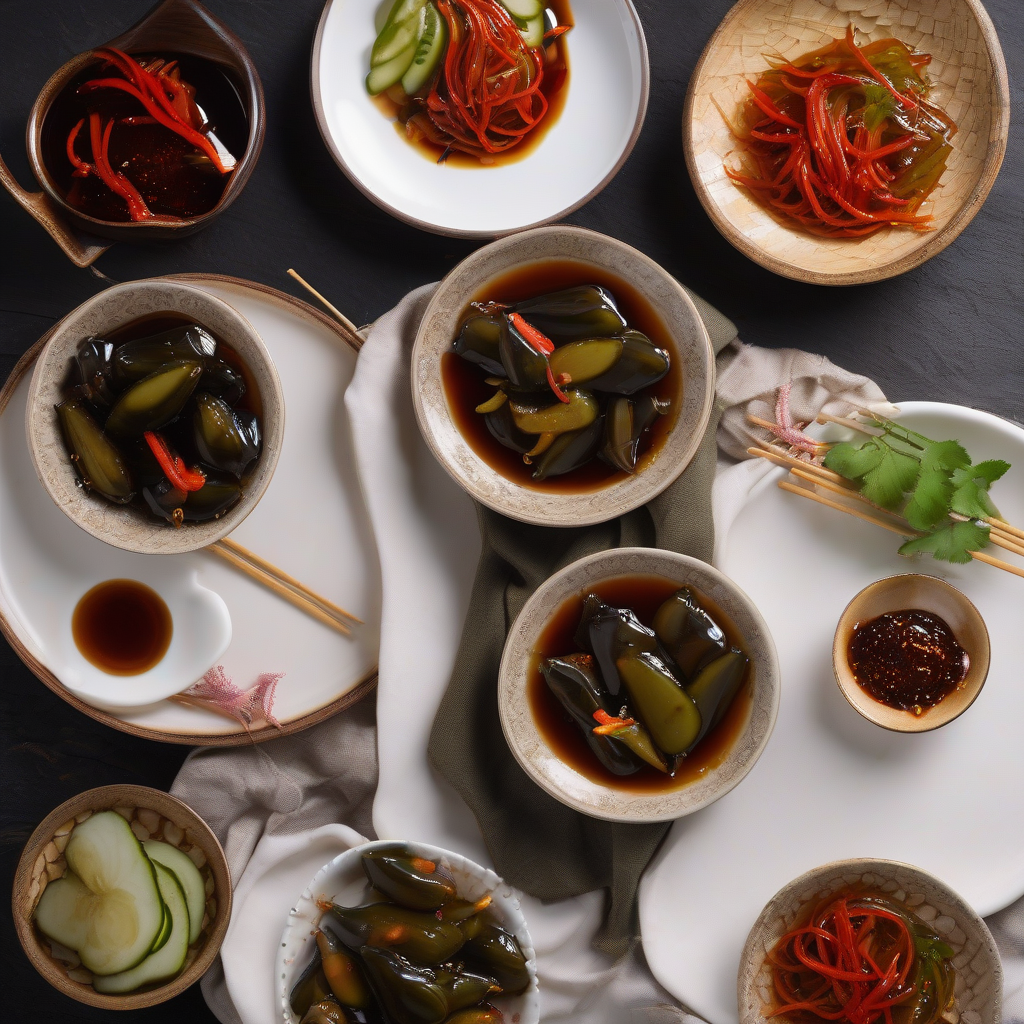 Foto: Just One Cookbook
Ingredients
- 4 Tbsp soy sauce ((I used Kikkoman® Gluten-Free Soy Sauce))
- 2 Tbsp rice vinegar (unseasoned)
- 2 Tbsp sugar
- 1 lb daikon radish ((⅓ daikon))
- 2 tsp Diamond Crystal kosher salt
- 1 dried red chili pepper
- 1 lb Japanese or Persian cucumbers ((3 pieces))
- 2 tsp Diamond Crystal kosher salt
- 1 dried red chili pepper
- 1 knob ginger
- 6 oz celery ((5 stalks))
- 2 cloves garlic
- ½ tsp toasted sesame oil ((I used Kikkoman® Sesame Oil))
- 6 oz komatsuna ((1 bunch))
- 1 Tbsp katsuobushi (dried bonito flakes) ((skip for vegan/vegetarian))
Steps
Gather all the ingredients.
This soy sauce pickling solution recipe is for one batch of pickles. If you are going to make all 4 kinds, you have to make 4 times this recipe. If you are making just 2 kinds, make double. In a small saucepan, combine 4 Tbsp soy sauce and 2 Tbsp rice vinegar (unseasoned).
Add 2 Tbsp sugar, and bring it to near boiling point over medium heat. Mix (or swirl) the sauce a few times to melt the sugar until dissolved. Set aside to let cool completely.
Peel and cut 1 lb daikon radish into quarters lengthwise, and cut them into ¼-inch (6-mm) slices.
Place the daikon slices in a sieve (I use a flat sieve). Sprinkle 2 tsp Diamond Crystal kosher salt over the daikon and spread it evenly. Set aside for 30 minutes to draw out the liquid from the daikon.
Meanwhile, remove and discard the seeds from 1 dried red chili pepper and cut it into thin slices.
Once the moisture is removed from the daikon, quickly rinse under water to get rid of the salt. Then, transfer the daikon to a clean towel or paper towel.
Dry the daikon with the towel and transfer it to a mason jar.
Add the chopped red chili pepper and cooled soy sauce mixture.
Put two glass weights on top of the daikon and close the lid. Mix the daikon and soy sauce mixture by swirling the jar.
Slice 1 lb Japanese or Persian cucumbers into ¼-inch (6-mm) slices and sprinkle with 2 tsp Diamond Crystal kosher salt. Set aside for 15 minutes.
Meanwhile, remove and discard the seeds from 1 dried red chili pepper and cut it into thin slices.
Peel 1 knob ginger, slice it into thin slabs, and then cut into julienned pieces.
After 15 minutes, quickly rinse the cucumber slices under water to remove the salt. Transfer to a clean towel.
Dry the cucumber with the towel and remove the moisture.
Transfer the cucumber slices to a mason jar and add the cooled soy sauce mixture.
Add the chopped chili pepper and julienned ginger.
Put 2 glass weights on top and close the lid. Mix the cucumber and soy sauce mixture by swirling the jar.
Cut 6 oz celery into ½-inch (1.3-cm) pieces and transfer them to a mason jar.
Peel 2 cloves garlic. Add the soy sauce mixture to the mason jar.
Add ½ tsp toasted sesame oil and the garlic cloves.
Put one glass weight on top and close the lid. Mix the celery and soy sauce mixture by swirling the jar.
Cut 6 oz komatsuna into 2-inch (5-cm) pieces and transfer to a mason jar.
Add the cooled soy sauce mixture and 1 Tbsp katsuobushi (dried bonito flakes).
Mix the katsuobushi and komatsuna together with chopsticks. Put one glass weight on top and close the lid. Mix the komatsuna and soy sauce mixture by swirling the jar.
Store the pickles in the refrigerator. They are ready to consume after 3 hours (depending on the vegetable and thickness of the cut). Strain the liquid off when you feel the pickles are about to get salty, but it‘s all up to your preference. Consume within 3–7 days (denser vegetables like daikon tend to keep longer without getting too salty, while cucumbers or leafy veggies get saltier quickly). For the daikon pickles, store them in a jar or container with a tightly sealing lid to minimize the odor; I recommend consuming them sooner as the odor gets stronger over time.

Loading comments...