Kimchi Nabe
Cure your winter blues with a steamy pot of Japanese Kimchi Nabe. Made with anchovy broth, kimchi, pork belly, and vegetables, this soup pot is hot and sour with a good kick of spice that warms you right up!
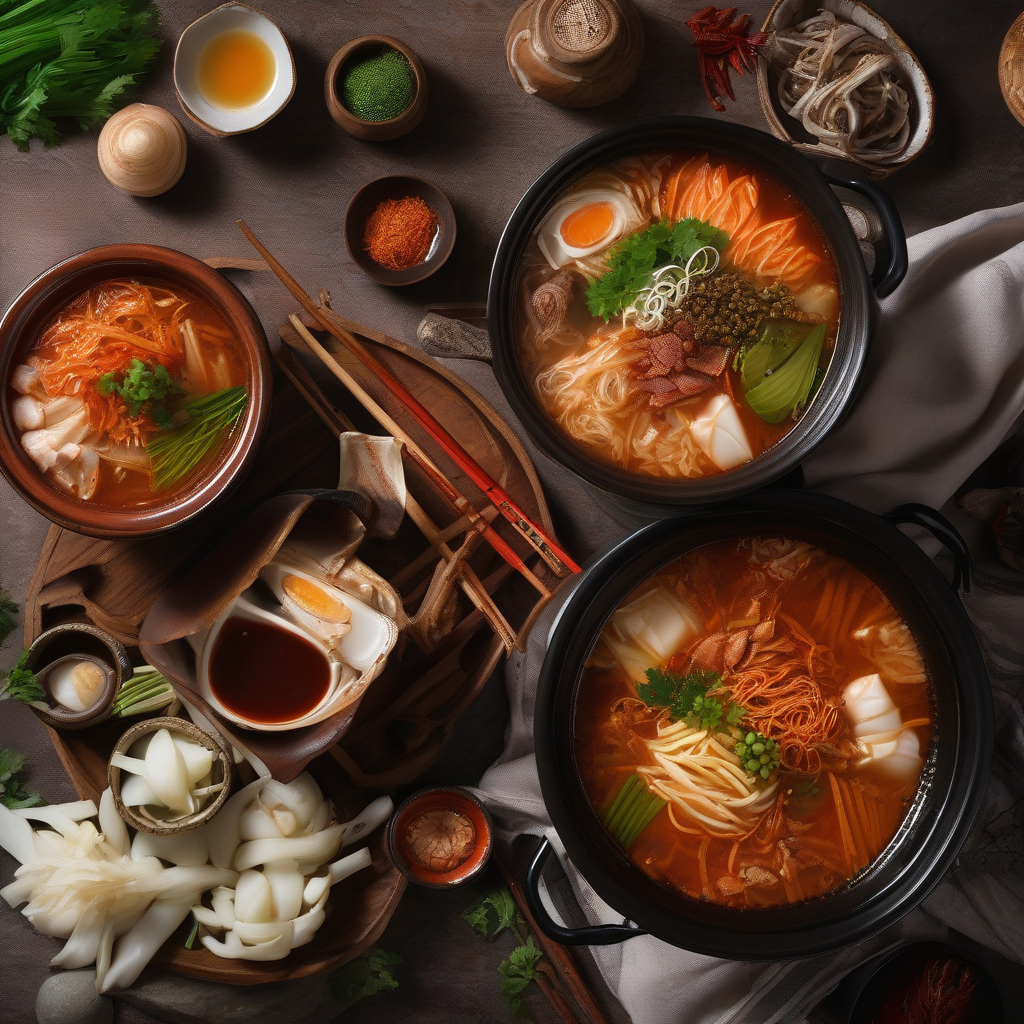 Foto: Just One Cookbook
Ingredients
- 1 lb kimchi ((cut if necessary))
- ½ onion
- 14 oz medium-firm tofu (momen dofu) ((1 pack))
- 6 leaves napa cabbage
- 1 Tokyo negi (long green onion) ((or 3 green onions/scallions))
- ⅓ carrot
- 3 stalks garlic chives (Chinese chives or Nira)
- 7 oz enoki mushrooms ((1 pack))
- 6 oz bean sprouts
- 13 oz sliced pork belly
- 1 Tbsp toasted sesame oil
- 4 cups dashi (Japanese soup stock) ((see recipe below; or use chicken broth))
- ¼ cup iriko/niboshi (boiled and dried anchovies)
- ⅓ oz kombu (dried kelp) ((about 3 x 4 inches, 7.6 x 10 cm per ⅓ oz))
- 4 cups water
- 1 Tbsp sake
- 1 Tbsp gochujang (Korean chili paste)
- 1 tsp gochugaru (Korean pepper flakes)
- 1 Tbsp sugar
- 4 Tbsp kimchi juice
- 1 Tbsp soy sauce
- 1 Tbsp miso ((you can use any type of miso))
- ½ tsp Diamond Crystal kosher salt
Steps
Gather all the ingredients.
This is an extra step and not everyone follows this method, but I highly recommend removing the head and guts from the anchovies to reduce the bitter flavor in dashi (watch how I do it in this video).
Gently clean ⅓ oz kombu (dried kelp) with a damp cloth (but don‘t wipe off the white powder—that‘s umami!) In a small saucepan, put 4 cups water, the kombu, and ¼ cup iriko/niboshi (boiled and dried anchovies).
Bring it to boil on low heat. It’s best to slowly infuse the water with the kombu and anchovies. Once boiling, cover and keep on low heat and simmer for 10 minutes.
Once you are done simmering the dashi, strain through a fine sieve. Set aside the dashi. Tip: With the spent kombu and anchovies, you can make candied anchovies and simmered kombu.
Meanwhile, start prepping the ingredients. Thinly slice ½ onion. Cut 14 oz medium-firm tofu (momen dofu) into small blocks.
Cut 6 leaves napa cabbage into 2-inch (5-cm) pieces widthwise (start cutting from the bottom toward the leafy side). The bottom part of napa cabbage is thicker, so cut these pieces into smaller pieces lengthwise (see how I do it in the video).
Slice 1 Tokyo negi (long green onion) diagonally into ½-inch (1.3-cm) pieces and slice ⅓ carrot diagonally into ¼-inch (0.6-mm) slices.
Cut 3 stalks garlic chives (Chinese chives or Nira) into 2-inch (5-cm) pieces. Discard the bottom of 7 oz enoki mushrooms and loosen them up.
Rinse 6 oz bean sprouts and place all the vegetable ingredients on a plate. Cut 13 oz sliced pork belly into 2-inch (5-cm) pieces and set aside.
In a large donabe (4–5 serving) or pot (use two donabe or pots if doubling the recipe), heat 1 Tbsp toasted sesame oil over medium-low heat and add the sliced pork belly. Stir-fry the meat until no longer pink.
Add 1 lb kimchi and onion and stir-fry for 5 minutes.
Then add 1 Tbsp sake and 1 Tbsp gochujang (Korean chili paste).
Add 1 tsp gochugaru (Korean pepper flakes) and 1 Tbsp sugar and mix it all together.
Add 4 Tbsp kimchi juice and 4 cups dashi (Japanese soup stock) and make sure it’s mixed evenly.
Cover and bring to boil. Once boiling, reduce heat to low and cook for 5 minutes.
Add 1 Tbsp soy sauce and 1 Tbsp miso. Mix all together and make sure the miso is completely dissolved.
Add the rest of ingredients and cover to cook on medium heat for 10 minutes, or until all the ingredients are tender.
Taste the soup and add ½ tsp Diamond Crystal kosher salt if necessary (I added about ½ tsp). Each miso has different saltiness, so you really need to taste the soup to adjust the flavor.
You can keep the leftovers in an airtight container and store in the refrigerator for 3 days.
Loading comments...