Anpan
Are you a big fan of Japanese pastries and baked goods? If so, you’ll enjoy Anpan, a classic Japanese pastry with sweet red bean paste inside soft bread. This homemade recipe comes with my step-by-step tutorial to guide you through the bread-making process.
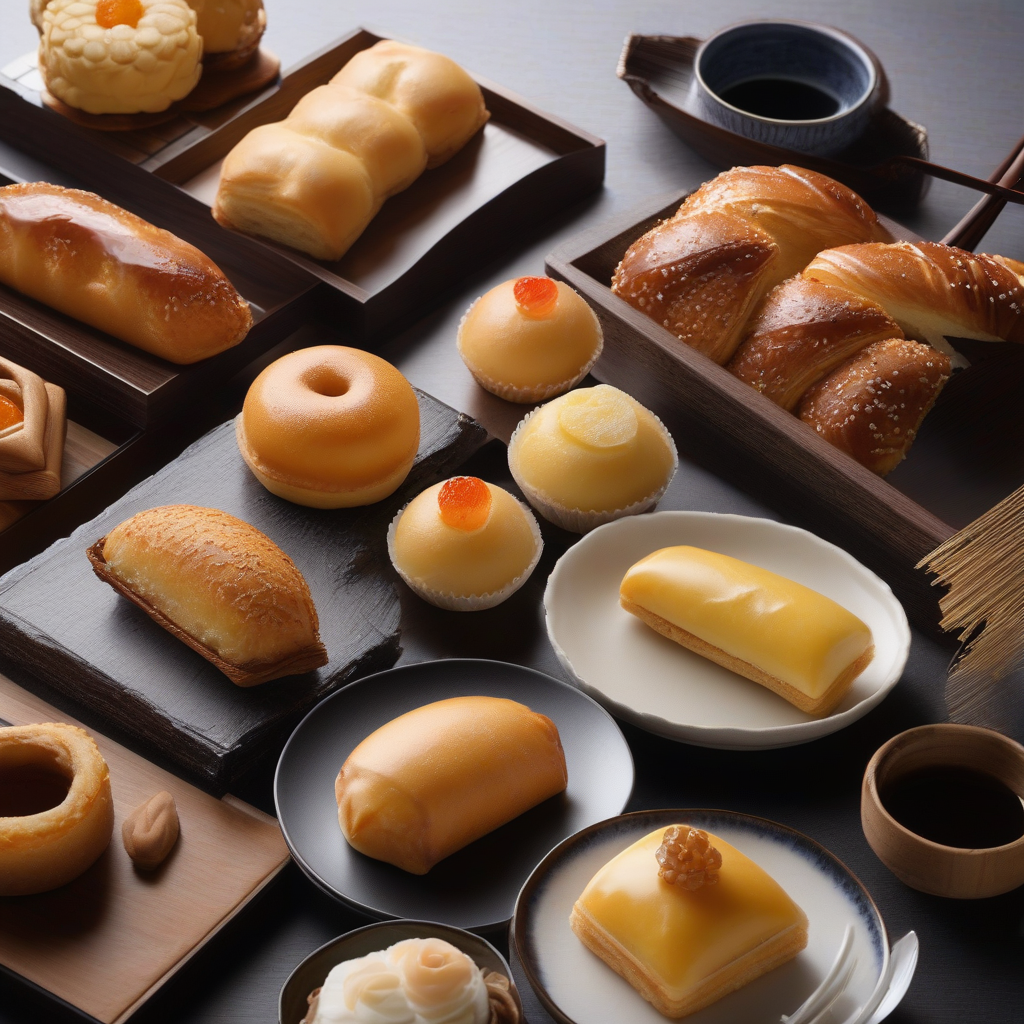 Foto: Just One Cookbook
Ingredients
- 225 g bread flour
- 3½ Tbsp cake flour ((you can make Homemade Cake Flour))
- ¼ cup sugar
- 1 tsp Diamond Crystal kosher salt
- 1 tsp instant yeast ((to use active dry yeast, see Notes))
- 1 large egg (50 g w/o shell)
- 50 ml whole milk
- 50 ml water ((3 Tbsp + 1 tsp; keep at 86ºF/30ºC, see Notes))
- 2½ Tbsp unsalted butter ((cut into small cubes))
- 10 oz sweet red bean paste (anko)
- 1 large egg (50 g w/o shell)
- 2 Tbsp water
- 2 tsp toasted black sesame seeds
Steps
Before You Start: Gather all the ingredients. I highly encourage you to weigh your ingredients using a kitchen scale for this recipe. Click on the “Metric“ button at the top of the recipe to convert the ingredient measurements to metric. If you‘re using a cup measurement, please follow the “fluff and sprinkle“ method: Fluff your flour with a spoon, sprinkle the flour into your measuring cup, and level it off. Otherwise, you may scoop more flour than you need.
In a large bowl, combine 225 g bread flour (2 cups minus 2 Tbsp), 3½ Tbsp cake flour, ¼ cup sugar, 1 tsp Diamond Crystal kosher salt, and 1 tsp instant yeast.
Beat 1 large egg (50 g w/o shell) in a small bowl and add to the bowl with the dry ingredients.
Add 50 ml whole milk (3 Tbsp + 1 tsp) and 50 ml water (3 Tbsp + 1 tsp), both of which you‘ve kept at 86ºF (30ºC).
Using your fingertips or a wooden spoon, gently mix the ingredients together until combined. In the beginning, the dough is very sticky and wet, but keep mixing until it forms a loose, sticky ball. Also, use the dough to pick up the flour on the sides of the mixing bowl. This step should take about 2 minutes.
Dust a clean work surface with bread flour and transfer the dough from the bowl. Press the heels of your hands into the dough, pushing forward slightly. Fold the top half of the dough in half back toward you. Rock forward on the lower part of your palm to press it flat. Turn the dough slightly (to clockwise), fold it in half, and rock into it again with the lower part of your palm. This process is called “punching“ the dough and the goal is to lengthen and stretch the gluten strands. Repeat for 5 minutes or so. Tip: If the dough doesn‘t seem to be losing its stickiness, sprinkle more flour over the top and work it into the dough. You can lightly dust your hands with flour to keep the dough from sticking too much.
After “punching” for 5 minutes, the dough will become more elastic. Press and stretch the dough until it measures 10 inches (25 cm). Then, put small cubes of 2½ Tbsp unsalted butter on top of the dough. Roll up the dough, tucking in the butter, and then continue the kneading process.
Your hands, dough, and the working surface will get oily and messy in the beginning. I recommend using a metal/silicone dough scraper to collect the dough stuck on the working surface.
As you knead, the dough will absorb the butter and it will eventually become smoother and easier to work with.
When the dough becomes smooth, start banging the dough onto the counter and fold it over away from you. This helps develop the gluten (elasticity). Bang the dough, turn it 90 degrees, and “punch” it, using the lower part of your palm. Continue this process for 10 minutes or until the dough is smooth, supple, and silky. Tip: Don’t let go of the dough when you are banging onto the counter. Don’t let it rest for too long between turns.
Now, it’s time for the windowpane test. Either pull on a part of the dough or tear off a small piece. Hold the dough in both hands and gently pull it into a square with your fingers. It should be very elastic, smooth, and shiny. If it‘s strong enough to stretch to a super-thin membrane without tearing and light can pass through the center, your dough passes the test. If it doesn’t stretch or it tears too easily, knead it again for another 2 minutes and test again.
Shape the dough into a ball by pulling all sides of the ball to the bottom and pinching them together.
Place the dough in a bowl, seam side down, and cover with plastic wrap. Let the dough rise in a warm place until it has doubled in size, about 1–2 hours. I use the Proof setting (100ºF/38ºC) in my oven.
Once the dough has doubled in size, use the finger test. Dust your index finger (or the top of the dough) with flour and use your index finger to poke the middle of the dough. If the hole does not close up, it’s ready for the next step. If the dough closes up immediately, proof the dough a little longer and test again.
Press the dough with your hands to release the gas and deflate the dough.
Fold both sides of the dough toward the center.
Then fold it in thirds toward the middle. Flip, keeping the seam side on the bottom.
Shape the dough into a ball, rotating (clockwise) with both hands while the seam line is touching the work surface.
Using a dough scraper, cut the dough into 8 equal pieces. If you need to adjust the size of dough, pinch off the center of the big dough and add to the center of the small dough and knead to combine well.
Shape each dough piece into a nice round ball, pulling from all sides and tuck into the bottom. Place the dough on your left (right) palm, and rotate it with your right (left) hand, keeping the seam side on the bottom.
Put the dough on a baking sheet lined with parchment paper or a silicone baking mat. Cover the dough with plastic wrap to prevent it from drying. Rest the dough for 15 minutes at room temperature.
After resting, flatten the dough balls with your hand, fold in thirds twice (just like you did earlier), and shape into balls again.
For each dough ball, press it so it stretches to a 3 inch (8 cm) diameter. From the 10 oz sweet red bean paste (anko), scoop 35 g and place in the middle of the dough. Then pull all sides of the dough around and wrap the red bean paste tightly to seal.
Pinch the seam very well and put the seam on the bottom. Place the dough on your left (right) palm, and rotate it with your right (left) hand a few times, keeping the seam side on the bottom. Put the dough back into the baking sheet, seam side on the bottom. Continue forming the rest of the anpan.
Cover the dough with plastic wrap to prevent it from drying. Let the dough rise in a warm place until the dough has doubled in size, about 30 minutes (I used the Proof setting (100ºF/38ºC) in my oven). When the dough has risen halfway, preheat the oven to 400ºF (200ºC). For a convection oven, reduce cooking temperature by 25ºF (15ºC). Note: If you are using the oven to proof, you have to transfer the dough to a warmer place so you can preheat the oven.
In a small bowl, add 1 large egg (50 g w/o shell) and 2 Tbsp water and whisk very well. Using a pastry brush, brush all sides of the dough with an egg wash.
Put 2 tsp toasted black sesame seeds in a small bowl. Dip the flat round side of a rolling pin (about ¾ inch (1.9 cm) diameter) first in the egg wash, then into the black sesame seeds, and finally into the top of the dough to stamp it with the seeds. Alternatively, you can simply sprinkle the black sesame seeds on top.
Bake at 400ºF (200ºC) for 13–15 minutes. Toward the end of baking if you see the bread rolls are not browning equally, rotate the baking sheet once so that the anpan brown evenly.
Once the bread is baked, transfer to a wire rack and let it cool. Serve warm or at room temperature immediately. Enjoy!
You can keep the bread in an airtight container after it’s been cooled and store at a cool place for 2–3 days or in the freezer for a month.
Loading comments...